
Cook County Projected Versus Actual
A projected date is a calculation or decision point based on facts known now. An actual release date records the event after the custodian has lawfully released or transferred the person. Cook County Jail, the Georgia Department of Corrections, and the State Board of Pardons and Paroles use different rules and labels. A date from one system should not be carried into another without checking the source.
A pretrial detainee has not yet received a sentence that can be reduced to a fixed end date. Bond, a first appearance, a warrant ruling, dismissal, transfer, or later sentence can change custody. The Cook County Magistrate Court handles bond hearings and issues most criminal warrants, while the Clerk of Superior Court maintains felony case records and sentencing orders. Jail staff can confirm whether a release has been processed, but the court record explains the legal basis.
For a sentenced person, the date still may move. Jail credit can be corrected. Earned credit can apply or be lost. A court can amend an order, another agency can place a hold, and the Parole Board can change a tentative decision before release.
Find Cook County Projected Dates
Do not start with a date calculator. Start with custody type. A local jail term is not computed through GDC, and a state-prison maximum date is not a Cook County jail release date. The person's sentence, case number, and current custodian determine which record can answer the question.
- Confirm whether the person is in Cook County Jail, GDC custody, federal custody, immigration detention, or another jail.
- For Cook County Jail, call (229) 896-7471, extension 2 and ask whether the person is pretrial or serving a county sentence.
- Request the sentence, bond order, or later modification from the Cook County court record when release depends on a judge's action.
- For GDC, open the offender query, search by name or ID, and compare Cook County as the conviction county when appropriate.
- Read the exact GDC label, including Sentence End Date or Maximum Release Date, rather than calling every date a release date.
- Check the Board's TPM tool when parole timing may apply, then confirm any completed release with GDC or the Board.
The GDC form supports active, inactive, or combined records. It also includes sentence-status filters for a maximum term ending soon and a state release in the past fifteen days. Those filters apply to Georgia state corrections records. They are not a Cook County list of people released on bond.
The Cook County released inmate record path can help when the custodian or release type is still unknown.
Cook County Earned-Time Rules
County jail earned time and state-prison credits are separate. O.C.G.A. Section 42-4-7 governs county inmate release at sentence expiration less lawful earned-time allowances. The statute addresses limits and credits tied to authorized work details. It does not create a flat credit that every Cook County inmate receives. Eligibility, exclusions, the imposed confinement term, jail credit, and the sheriff's lawful records all matter.
O.C.G.A. Section 42-4-4 bars a sheriff from releasing a prisoner before lawful completion of the sentence, including allowed trusty credits, unless law or court order authorizes the release. In plain terms, an early date must have a legal basis such as bond, a court order, sentence completion after credits, or transfer. Jail staff cannot simply choose an earlier day.
GDC uses its own sentence fields and programs. The Performance Incentive Credit program allows eligible offenders to earn up to twelve PIC points and potentially reduce a Tentative Parole Month or Maximum Release Date by one to twelve months. The result is not automatic. Case-plan progress, education or vocational work, and approved work or detail assignments can affect eligibility.
The GDC Performance Incentive Credit page shows the official program described here.
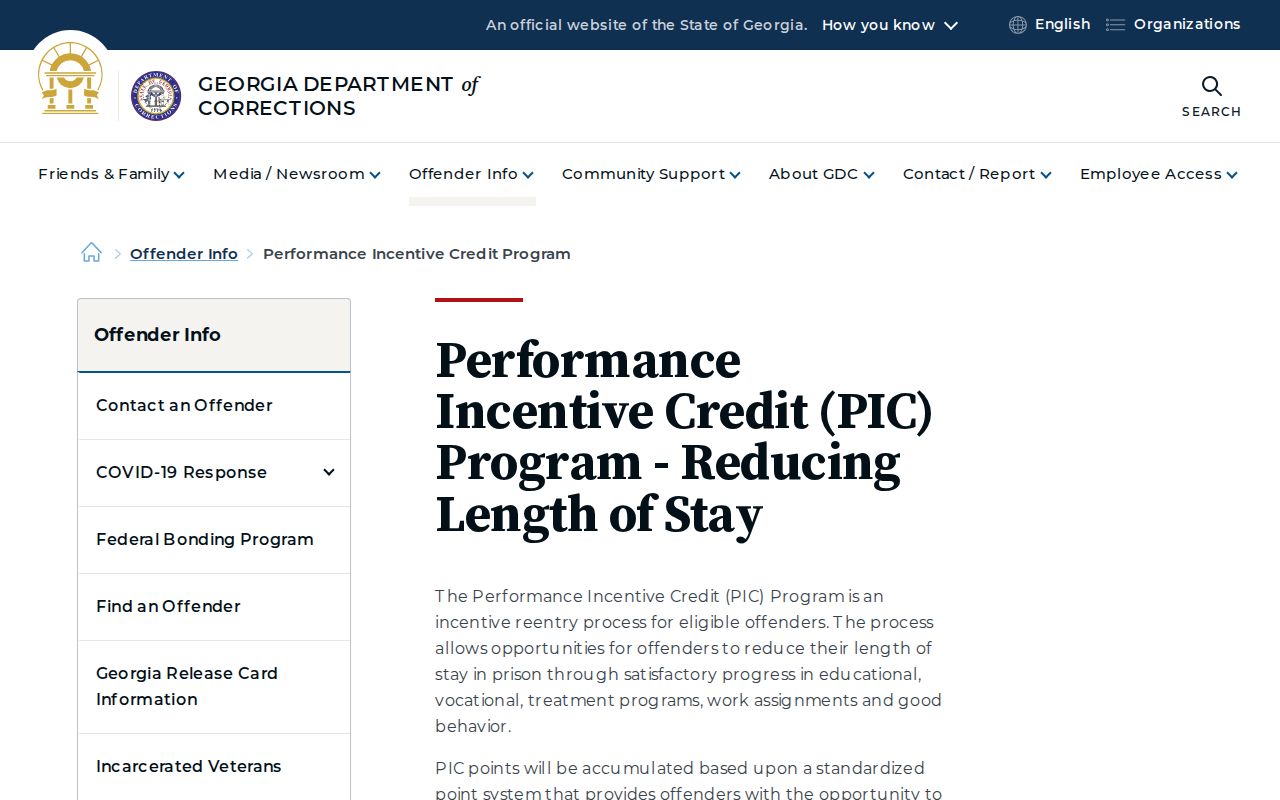
The state page helps explain why an eligible prisoner's displayed date may change, while county jail credit still follows a separate statute.
Why Cook County Dates Change
A date can move because the source facts or legal status changed. Some changes shorten the projected term. Others extend custody or replace release to the community with a transfer. The listed reason should be verified with the agency that entered it.
| Factor | Possible effect | Best source |
|---|---|---|
| Jail credit correction | Moves the computed sentence end | Court sentence and jail record |
| Earned credit or loss | Shortens or restores time under lawful rules | Cook County Jail or GDC |
| Bond or amended order | May authorize release before a prior estimate | Cook County court docket |
| Detainer or hold | May cause transfer or continued custody elsewhere | Holding and receiving agencies |
| Parole action | Sets, delays, changes, or denies a parole path | Georgia Parole Board |
| Misconduct or unmet program | May postpone a TPM or affect credit | GDC and the Board |
| Sentence restriction | Limits parole or ordinary credit assumptions | Statute and sentencing court |
A detainer is a notice that another authority may want custody. It can make Cook County Jail report a local release while the person is handed to another jail, GDC, BOP, or ICE. That is a transfer from one custodian's view, not proof that all confinement ended.
Note: Always pair the date with its label, source agency, current custodian, and last update before treating it as useful.
Confirm Cook County Release Dates
A projected date becomes reliable release proof only after the responsible office records the event. For Cook County Jail, seek the booking and release record from the sheriff. Ask for release date and time, reason, authority, and transfer destination when applicable. If bond or a court order controlled the event, obtain that court filing too.
For a state prisoner, compare the GDC active or inactive record with parole information. The Board's TPM lookup addresses a planned parole month before release. The Parolee Database addresses a person after release to parole. GDC's disclaimer directs written verification to Inmate Records and Information, PO Box 1529, Forsyth, GA 31029.
A pending custody alert can be registered through the Cook County VINELink check. VINELink may notify users of a reported release or transfer, but processing can lag and the alert may not state the full legal reason. Confirm the result with the agency named in the event.
Cook County State Date Labels
GDC date labels are not interchangeable. Sentence Begin Date reflects the effective start of the sentence, including jail time or special instructions when applicable. Sentence End Date reflects the effective end after the maximum term, non-running time, and earned credit. Maximum Release Date, or MRD, is the date the person would leave GDC custody after serving the entire sentence, apart from parole decisions.
Tentative Parole Month, or TPM, belongs to the Board's parole process. It is the planned month for final review and possible setting of a parole release date. It can be postponed or canceled. Parole Consideration Date applies in settings such as life sentences and parole revocations. A life or death sentence does not carry a normal MRD under the cited GDC definitions.
- MRD
- Maximum Release Date from GDC custody if the full term is served, excluding parole.
- TPM
- Tentative Parole Month for later Board review, not a final release date.
- Jail credit
- Time credited to the sentence under the court order and lawful calculation.
- Detainer
- A notice that another authority may seek custody.
Using the full label prevents a major error. An MRD can be later than a possible parole date, while a TPM can pass without release. The source record should also be checked again after any court correction, disciplinary event, or Board action.
Cook County Parole Eligibility Limits
O.C.G.A. Section 42-9-45 supplies Georgia's general parole eligibility framework. It describes eligibility after six months or one-third for a misdemeanor sentence, whichever is greater, and after nine months or one-third for a felony sentence, whichever is greater, subject to exceptions. Eligibility means the Board may consider the case. It does not mean parole will be granted on that date.
Serious violent felony cases require a different reading. O.C.G.A. Section 17-10-6.1 defines serious violent felonies and sets mandatory prison terms. The Board states that certain non-life sentences for those offenses, with qualifying crime dates, are not parole eligible. A simple one-third estimate is therefore unsafe.
The serious violent felony statute source is captured below. It should be read with the actual Cook County sentencing order and current Board rules.
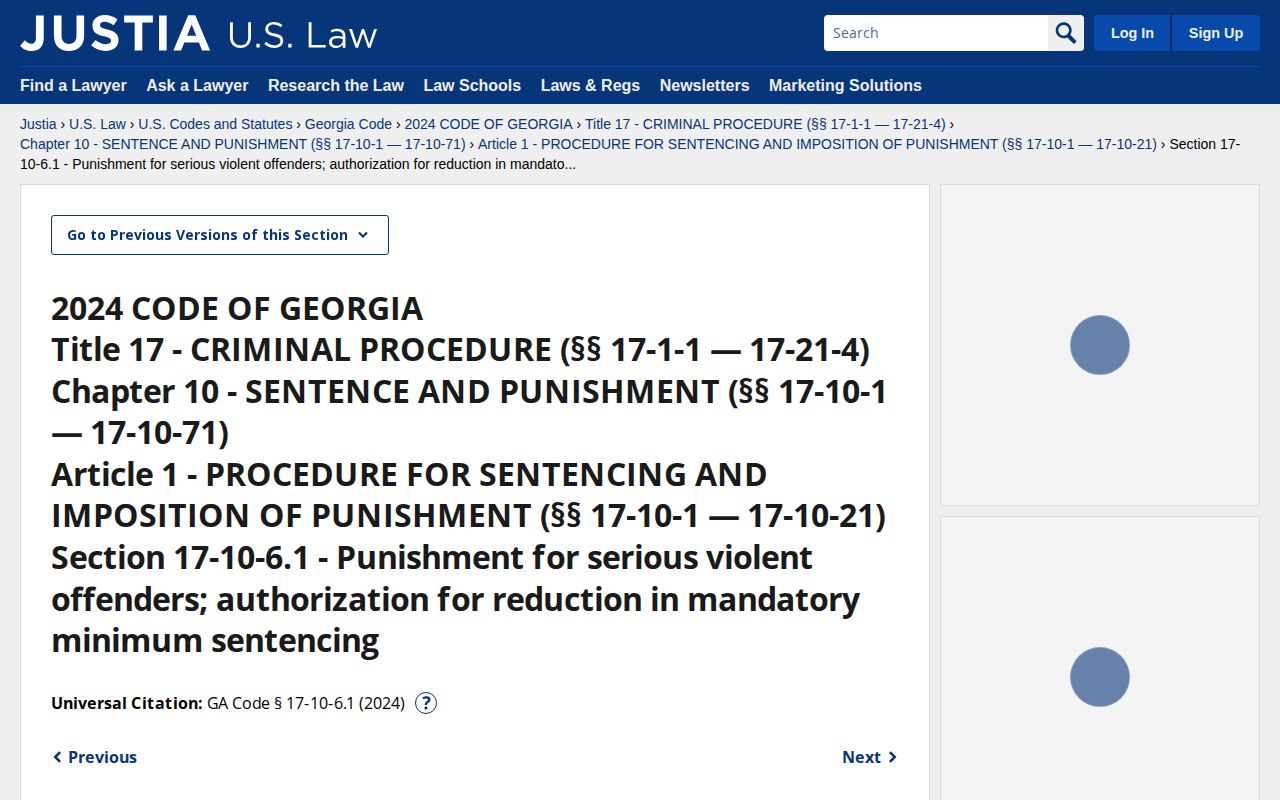
The statute shows why offense type and sentence terms must be known before any parole or release estimate is made.
Two Cook County Release Calculations
Cook County Jail sentence completion and GDC projected release computation follow different records. County confinement uses the court sentence, jail credit, county earned-time law, and the sheriff's calculation. State prison uses GDC sentence fields, state credit programs, and separate Board parole decisions. The same person may pass through both systems, but the dates still come from different custodians.
If a Cook County case led to a state prison sentence, the sheriff's transfer ends local jail custody. GDC then becomes the source for MRD and sentence fields. A later release to parole moves the status question to the Board and DCS. Conversely, a person who serves a county sentence without entering GDC will not gain a state-prison projected date merely because the conviction occurred in Georgia.
This split is the central long-tail answer for anyone asking for a Cook County projected release date without knowing where the person is held. Find the custodian first. Then use the date label, governing rule, and release record from that same system.